

Rachael Bernstone, founder of Sounds Like Design, in 2016 when the business first launched.
When I launched Sounds Like Design as a specialist comms consultancy for architects in March 2016, there were very few people talking and writing about the business of architecture.
And there was very little discussion about how business development, marketing and communications are central to the ongoing viability of the profession.
So I’m really pleased that – over the past decade – a lot has changed in that regard.
“Business Development and Marketing” is still not part of the architecture curriculum, because it’s not formally included in the National Standard of Competency for Architects, but it may be added in future.
In the meantime, architects can choose to intentionally become more proactive about how they win new clients and projects, and there are plenty of options to access support, advice, and CPD training.
Architects who want to upskill, adapt and evolve don’t have to make this transition on their own.
What’s changed when it comes to business development and marketing in architecture firms?
I think the architecture profession is at a critical point in the uptake of new skills and knowledge relating to business development and marketing, at the start of 2026.
When new technologies and ideas emerge, they usually take some time to be widely adopted, and to reach mainstream status.
The Diffusion of Innovations theory - as described by Everett M. Rogers in 1962 - provides a useful model for us to to consider where the profession currently sits, and to consider what might happen next.
Rogers described how innovations are communicated through social systems and communities - to reach 100% penetration - by segmenting social systems into five key stages by size. These are:
Innovators - 2.5%
Early Adopters - 13.5%
Early Majority - 34%
Late Majority - 34%,
Laggards - 16%
(This 4-minute video - called How New Ideas Spread - describes the Diffusion of Innovation theory works, and the characteristics of the various groups.)
As a long term observer of the architecture profession since 2002 - and as a provider of consulting and CPD training on business development and marketing since 2016 - I think we are on the cusp of a transition from one stage to another.
I’m not sure whether its from stage 1 to 2, or from stage 2 to 3, and I’d welcome feedback and comments from readers - where do you think we are at currently, and what will happen next?
I can’t see how the profession can achieve 100% penetration without adding “business development and marketing” to the NSCA, but I’m encouraged by recent indicators (see my summary below) that suggest we are moving into a new phase.
As an aside, the Diffusion of Innovations theory provides a useful to understand how your architecture clients might engage with, adopt and help to spread new ideas and technologies, such as sustainability, energy efficiency, carbon counting, net zero built environment goals, etc.
Which of the five stages are your current clients in, and what information, data and knowledge might they need to confidently invest in your services going forward?
Why do I think we’ve reached a “tipping point” in architecture?
There are many more consultants and experts offering specialised business development and marketing services to architects now, and many more visible conversations about “the business of practice” in podcasts and across architecture media platforms.
The ACA has always focussed on the business of practice, and now the Institute is offering CPD training on this topic as well.
Examples of shifts that I’ve observed over the past decade - and some of the latest developments in this space - include:
In 2016, the Architectural Review Magazine shifted its focus from the creative discipline of design to the business of architecture.
In 2025, Dezeen started running a series called Performance Review, on the business of practice.
In October 2025, RIBA in the UK published a report titled The Future Business of Architecture - to help its members to build businesses resilience to thrive through uncertainty. You can download a copy here.
At the beginning of 2026, ArchitectureAU launched a new monthly newsletter on the business of architecture.
At the time of writing (April 2026), the Institute launched a new online CPD program called Leadership in Practice.
And also in April 2026, the Institute is launching a new Business School for Architects, spearheaded by Ross Donaldson and Stephanie Bullock. The launch follows a successful pilot event held in Melbourne in March. More information from Victoria Chapter President Stephanie Bullock on the pilot can be found here, and the link for the EOI - which closes on 30 April 2026 - is here.
In October 2026, a new type of conference will take place in Melbourne. Founded by Nikita Morell and Aya Schlacter, the ArchiCon 2026 conference has a focus on business and AI and is billed as an “Unboring Business Conference for Architecture Firms”. They have announced a few speakers so far, with more details coming soon.
And the Institute’s national conference - themed Together. Or Not At All? - is happening in the same month, in Brisbane. Program details haven’t yet been announced.
What are “pipelines” in architecture, and why are they a problem?

The famous Trevi Fountain is the visible endpoint of an ancient underground pipeline, which delivers gravity-fed spring water from Salone to Rome.
Photography: Gabriella Clare Marino via Unsplash.
This growing focus on the business of practice has given rise to a new vocabulary – one that revolves around profit, purpose and pipelines.
And, like most concepts in architecture, there is scope for interpretation around what these words actually mean.
I’ve seen three different meanings assigned to the word “pipeline” lately, so I thought it would be useful to unpack them further.
New client pipelines
When I talk about “new client pipelines”, I’m referring to the systems and processes that underpin how an architecture business attracts and wins its new projects and clients, whether via tenders, fee proposal or speculative competitions, or a combination of the above.
Some firms have very clearly defined and proactive structured systems and processes in place to win new work – with key team members dedicated to business development tasks and objectives – while other firms have a more ad hoc and reactive approach.
I strongly believe that the quality of projects that architecture firms seek, attract and win has a clear causal relationship with the quality of work that they can photograph, use for positioning and promote to future clients.
And it takes a while for this causal relationship to unfold – at least two to three years’ in most cases – so it’s worth paying attention to the type of work at the source, or the tap, because it will have a profound affect on your portfolio in a few years’ time.
That’s why the new client pipeline methods that I’ve developed revolve around helping firms to become more intentional in how they position themselves now – to attract and win the right types of clients and projects work – to ensure they are earning appropriate fees, being properly stimulated, and delivering on their architectural mission, however they’ve defined their goals.
Next generation pipeline
I’ve also seen the word “pipeline” used to describe how to nurture and support the next generation of architects rising through the ranks of the profession.
This pipeline faces considerable challenges, from the high number of new graduates seeking work, to the lack of time and resources available within firms to invest in young talent, and to more recent threats from AI, which is looming like a wrecking ball over entry level roles in many professions, including architecture.
Project and resourcing pipelines
I’ve also seen a third reference to “pipelines” which relates to the resourcing of people and resources on actual projects – specifically how to allocate and assign teams and tasks on projects.
This process can be complicated by the fact that some projects may not proceed from one stage to the next, or they may be put on hold without notice, or they might be cancelled altogether, or even in some cases, be assigned to another firm for delivery.
These project pipelines generate considerable stress for management teams, who need to stay on top of progress, performance, billings, budgets and and timelines, while juggling staff across a fluid array of projects at different stages, in an operating environment where client unpredictability - and market volatility and uncertainty - are the norm.
What’s the best way to untangle and manage these pipelines?
All of these different pipelines are interdependent on each other – it’s impossible to nurture a new talent pipeline without healthy project and resourcing pipelines, and neither can exist without a robust new client pipeline – but each of these pipelines requires a different skillset to manage effectively.
In a medium or large firm, different team members might take responsibility for these three discrete functions, but in a small firm, one architect might oversee all three simultaneously.
And that’s a lot of responsibility, which weighs heavily on firm owners and directors, especially in solo and small firms.
So if you’d like some help with your new client pipeline – and you’re ready to invest in learning how to intentionally position your firm to win more of the work you want and need to underpin your new talent and project and resourcing pipelines – I can help.
I’ve developed a new client pipeline system that architects can customise for their own purposes, to attract and win more of the work they love.
Once you set up your new client pipeline system – and turn on the tap to get your clients and projects flowing with minimal effort - gravity-fed, so to speak – you can free up your time and attention to take care of the other two pipelines.
Build your new client pipeline first, and the other pipelines will flow more smoothly.
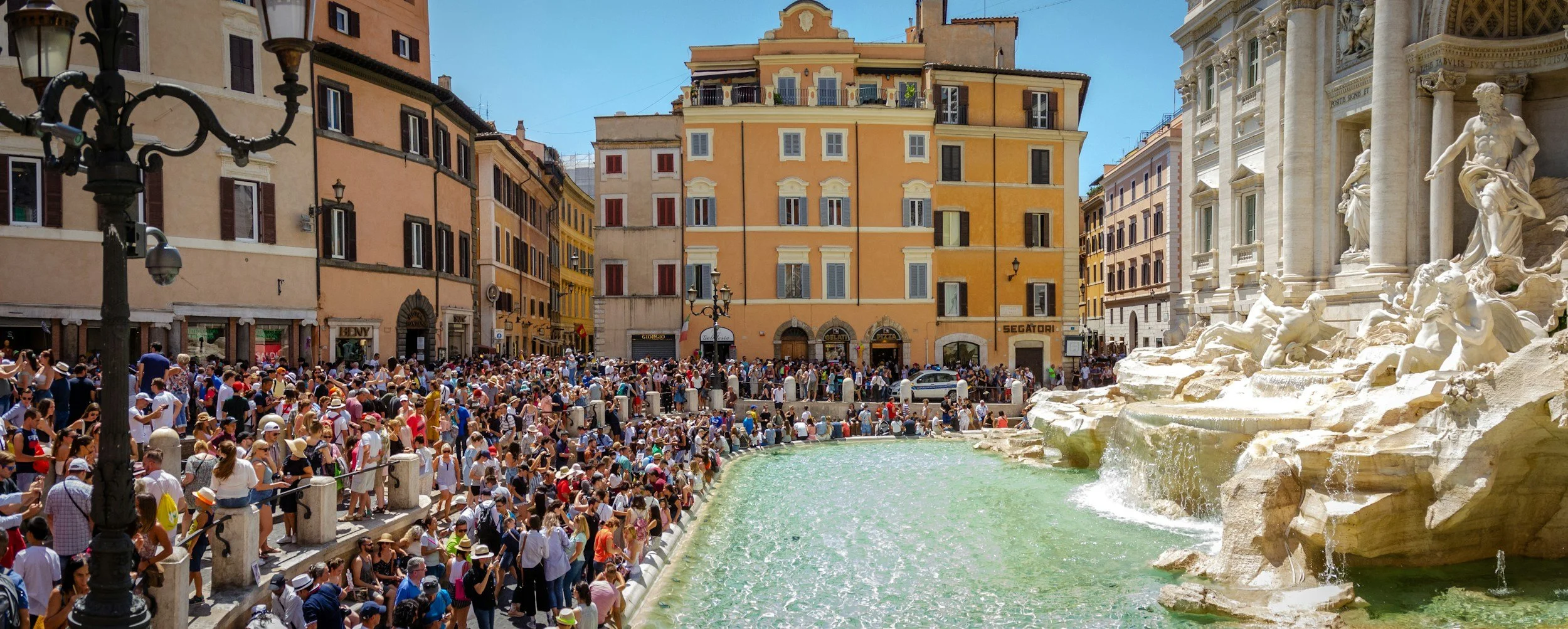
Not only is the Trevi Fountain a potent symbol of the easy and continuous flow of precious springwater - via an ancient aqueduct - people throw coins into it everyday, adding up to about €1.5 million per year. And tourists strive to return to Rome again and again. These three interdependent pipelines all rely on each other to function effectively.
Photography: Jeff Ackley via Unsplash.
3 ways to start building – or keep refining – your new client pipeline
1. Beginner:
Take our CPD Express mini-course How and why to build a new client pipeline for an introduction to new client pipelines for architecture firms.
2. Intermediate
Apply for the next round of the Shake + Stir Experiment, a 30-day experience to unearth and convert hidden or forgotten opportunities in your new client pipeline.
You can see when the next round is taking place and register your interest by completing the application form here.
3. Advanced
Take the Architecture Marketing 360 CPD course and learn our proprietary new client pipeline system, and access our New Client Pipeline Roadmap, designed specifically for architects.

Still not sure how to get started?
Take our quiz and enter your email at the end.
We’ll send you an invitation for a free 30-minute Zoom call, to help you work out your next right move.
I write my blog articles and weekly newsletters from scratch, without the use of AI. As a journalist with an MArch in History and Theory, I love this opportunity to flex my critical thinking muscles and obtain more clarity around swirling thoughts and ideas, via this practice of writing.