
What negotiation skills are architects hiding from their clients?

How can architects highlight their negotiating skills when setting salaries or asking for a payrise?
Photography: Mina Rad via Unsplash
In a recent podcast episode, Brené Brown and Adam Grant discussed a new evidence-based approach for negotiating a salary or asking for a pay rise.
And I wondered if this approach could work for architects across different scenarios and circumstances, such as:
individual architects, who are making the case for a higher salary when starting a new position,
individual architects, who are asking for a promotion and/or payrise, and
architecture businesses, that want to charge higher fees for their services.
1. Why should you highlight your negotiating skills when talking about architecture salaries?
Considering the length of study that architects undertake to get registered - and the risk and responsibility they carry for their clients - architects are some of the lowest paid professionals in the construction sector.
(Read How do architects’ salaries compare? for more details.)
Towards the end of the episode titled "BS Disclaimers, Invisible Armies, and the Importance of the Words We Choose", Adam Grant mentioned an evidence-based approach for women* to negotiate a salary or request a pay rise.
Essentially, it's about highlighting their negotiating skills - and how those negotiating skills will benefit the employer - to justify the salary or pay rise request.
Here's how Adam Grant framed the findings from Hannah Riley Bowles and Linda Babcock's research:
"I don't know how typical it is for people at my level to negotiate. But I'm hopeful you'll see my skill at negotiating as something important that I bring to the job.
This is something I'm really good at...
And I'm going to be negotiating on your behalf, if you hire me or if you give me a raise.
So this skill that you could otherwise perceive as hurting you - because I'm asking you for more money - this is actually going to work to your benefit."
2. How do architects "negotiate" on behalf of their clients?
Do you make it clear that you're a master negotiator, for your clients?
Or are your negotiating skills hidden, or invisible?
I compiled a list of ways that architects negotiate, which are often overlooked:
You negotiate with clients who don't yet have the same vision - or agree on brief, budget and scope - to get everyone on the same page so they can move forward.
You negotiate the built form to comply with myriad construction and planning regulations - often competing and conflicting requirements - to obtain approval.
You negotiate with clients to keep you on for the next stage, and haggle over fees that don't reflect the inputs required for high quality outputs, especially documentation.
You negotiate with neighbours, stakeholders and the community, sometimes taking projects to court or arbitration to get the green light.
Once the design and documentation are approved, you negotiate with contractors and cost experts, to "value manage" the design against your client's growing aspirations and shrinking budget, while reining in spiralling construction costs.
Then you negotiate with builders, tradespeople, suppliers and other collaborators to bring the agreed and approved design to life.
Onsite, you negotiate on behalf of your clients - and advocate for the design intent - as you deal with unforeseen problems and issues that crop up and threaten to derail the project.
And professionally, you negotiate with insurers, regulators, and peak bodies, to uphold and assert your legitimacy and protected title, so that you can continue to practice in an increasingly complex and sometimes hostile operating environment.
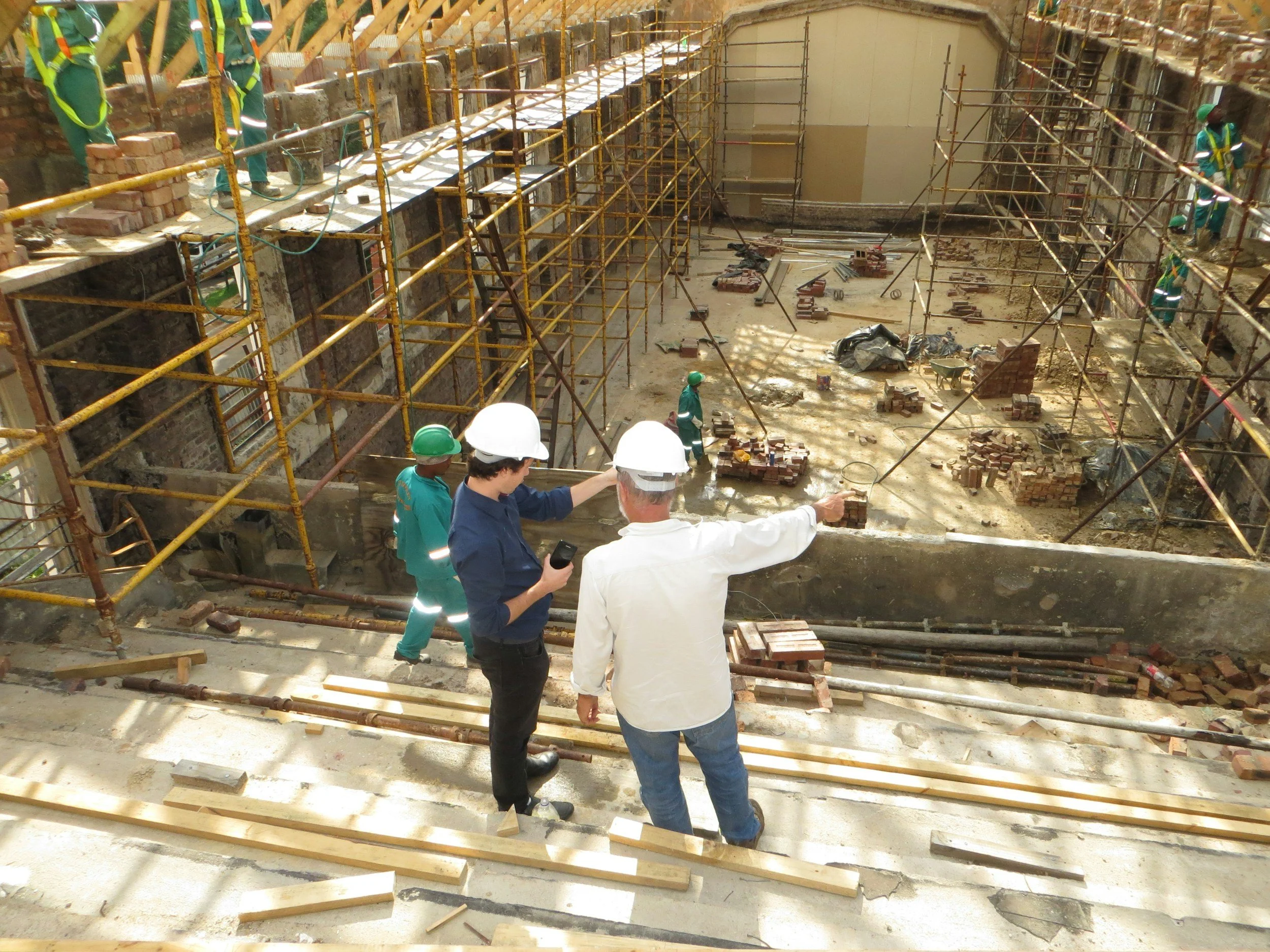
Architects negotiate on behalf of their clients throughout the entire design and construction process, but these skills are often overlooked and undervalued.
Photography: Mark Potterton via Unsplash.
Phew, that is a lot of negotiating.
Are you surprised by the depth and breadth of your negotiating skills, when you see them all written down?
Did I omit any from this list? What other critical risks and responsibilities do you negotiate for your clients? (Feel free to share your thoughts in the comments.)
Negotiating and conflict resolution form a significant part of the architects’ job description, yet these skills aren’t necessarily appreciated by your clients.
To me, this list makes it really obvious that architects aren't getting paid enough.
And this is especially true when you consider that your negotiating skills usually unlock a significant uplift in value for your clients, the wider community, and the planet.
Which got me thinking: do lawyers negotiate this level of complexity for their clients, in exchange for peanuts?
(We compared architecture salaries with those of doctors and lawyers in How do architects’ salaries compare?)
3. How to highlight your negotiating skills to clients, to charge higher fees
I think we agree: architecture projects are long, complex and challenging.
Do we also agree that they are taking longer, and becoming more complex and challenging all the time.
Architects are contending with more regulations and compliance issues, new parameters such as carbon accounting, and an expanding list of NSCA competencies.
All of these factors make your job more onerous.
But your fees and salaries aren't keeping pace with these changing conditions.
In short, you're not being properly compensated for all of the risks and responsibilities that you're being forced to take on.
So if you don't explain to your clients just how valuable your negotiating skills are - and the downsides they face without your expertise and oversight - how will they understand and appreciate all of the ways that you shepherd their project from a mere spark of an idea to an actual physical built outcome?
How will they recognise all of the value that you deliver?
Looking at the list I compiled above - which you can use to start reframing your own client acquisition and marketing messaging - it strikes me that architects are great at negotiating for your clients; but not so great at negotiating for yourself.
4. How am I - Rachael - negotiating on architects' behalf?
I’ve been a fierce advocate for architects - and all of the value that you deliver beyond design - for many years.
And recently, I had an unexpected opportunity to highlight that value to a wider audience.
It started when I received a phone call from a journalist at The Sydney Morning Herald.
Do you know Julie Power? She writes great stories about architects and architecture in NSW. Julie and I have emailed in the past, but we've never met or chatted before, so her request came out of the blue.
Julie outlined the context for a story she was writing: a short feature about an architect's own house, with a focus mental health, where the design played a restorative role after a period of burnout.
Before I continue: hats off to Stephen Collier - whose OK House was shortlisted in both the NSW Chapter and the HOUSES awards - and who generously shared his personal story in Julie's article. (Stephen also gave me permission to reshare this story with you).
Julie asked me why poor wellbeing and high rates of burnout are so prevalent among architects, compared to many other professions.
We talked about the complex challenges that you're facing, and I pointed her towards the recent findings from the ACA's recent Pulse Check Survey, as well as The Wellbeing of Architects survey and the Parlour Guides to Wellbeing in Architecture Practice.
Julie included some of my comments in the print version of the story, which ran in Friday's paper. And a slightly extended version appeared online. You can read it here.
(The article is paywalled for subscribers, so I've reproduced my comments below, with some additional bold emphasis.)
“Rachael Bernstone, the founder of Sounds Like Design, which provides business and communications advice to the profession, said many architects’ livelihood is under threat. “They haven’t adapted to this new operating environment very well,” she said.
That backdrop is one of falling revenues, small practices are vulnerable to economic shocks, staffing changes, the undercutting of fees and increased risks, she said, citing recent findings.
Bernstone said architects didn’t charge enough, considering they had to manage increasingly complex regulation, more bureaucracy, threats from climate emergency and the changing nature of the profession with AI.”
A week before I received this call from Julie Power, I’d delivered a CPD session about how to get your work and expert knowledge published in the media (you can sign up hereand get instant access), and then I was contacted by The Sydney Morning Herald, to discuss how architects should be paid more...
… and I don't think that's a co-incidence, do you?
Are you ready to negotiate a better deal?
Are you prepared to make your claim for higher fees - fees that accurately reflect the value of your negotiating skills, and all of the other skills and expertise that you bring to your clients' projects?
When you're ready to use your negotiating skills to improve your own financial position, we can help.
You can book a free 30-minute call with me - Rachael - here, to talk about what’s missing in your current business development strategy, and how to plug those gaps.
Because you're an architect, and your negotiating skills are worth way more than you think they are.
Or maybe you’re ready to access our services, which come in Small, Medium and Large sizes as follows:
Small - the Acupuncture Service is a “book-an-hour” session with Rachael, where architects can seek input around any business development or marketing topic of their choice. You can buy your session online and book your appointment via the online calendar.
Medium - the on-demand, online CPD course Architecture Marketing 360 is a 101-style course about modern marketing for architects. It outlines Sounds Like Design’s proprietary MArchitecture System so you can design and build a pipeline of new clients and projects that you love. Work through the course at your own pace, and use the New Client Pipeline Roadmap to guide your implementation.
Large - our one-on-one consulting package Review + Reset takes place over 3 months. It’s a deep-dive into your current business development and marketing activities, and we’ll co-create your Business Development and Marketing blueprint, so you can delegate and automate key tasks, and free up your time for the creative work you really love doing.